The Fast Answer: Choose Based on Uptime, Not Labels
If you are deciding between OEM and aftermarket crusher parts, the right answer usually comes down to fit, performance, lead time, and the real cost of downtime.
OEM parts can be a strong choice when you want exact compatibility and a known baseline. Aftermarket parts can be the better option when quality is proven, lead times are tighter, or you need a practical sourcing path to keep production moving.
The mistake is treating every part the same. Some components demand tight fit and predictable wear. Others give you room to optimize sourcing without risking uptime.
Why This Decision Impacts More Than Your Parts Budget
Crusher parts do more than wear out. They influence throughput, gradation, maintenance intervals, and how often your crew is forced into reactive work.
A part that looks cost-effective on paper can cost more if it installs poorly, wears unevenly, or shortens your maintenance cycle.
Start with a simple question: what does failure or underperformance cost your operation in lost tons and labor hours?
What OEM Parts Usually Offer
OEM parts are often chosen for consistency and alignment with original equipment specifications.
You will typically lean toward OEM when:
- You need a direct replacement with minimal evaluation
- You are maintaining a known performance baseline
- The component has tight fit tolerances
- The asset is critical and you want predictable installation
OEM parts reduce uncertainty, especially when your team is working under time pressure or standardizing across sites.
What Aftermarket Parts Can Do Well
Aftermarket parts are often misunderstood. High-quality aftermarket parts are not simply substitutes. In many operations, they help you manage supply, avoid delays, and keep key assets running.
Aftermarket options make sense when:
- Lead time is limiting your ability to respond
- You need consistent supply across multiple machines
- The part has already proven reliable in your conditions
- You want more flexibility in purchasing without sacrificing performance
The key is not whether the part is OEM or aftermarket. The key is whether it performs reliably in your application.
The Questions That Lead to Better Decisions
Strong purchasing decisions usually come from a short set of operational questions.
Ask yourself:
- How critical is this part to uptime?
- How sensitive is performance to fit and wear profile?
- How long can your operation wait for delivery?
- Have you run this part successfully under similar conditions?
- Will the choice affect install time or maintenance frequency?
If the part can stop the plant, your decision should reflect downtime exposure, not just invoice cost.
Simple Comparison Table: OEM vs Aftermarket Crusher Parts
| Factor | OEM Parts | Aftermarket Parts |
|---|---|---|
| Fit expectations | Strong baseline for original spec alignment | Varies by supplier and application |
| Lead time | Can extend depending on manufacturer and supply chain | Often more flexible depending on sourcing |
| Flexibility | Tied to original equipment path | Broader sourcing options |
| Best use case | Fit-sensitive, highly critical components | Proven replacements and repeat-use parts |
| Main risk | Longer lead times in some cases | Variation in quality between suppliers |
Where This Becomes a Revenue Decision
When you improve how you source parts, you improve how the plant runs.
Better uptime leads to more sellable tons, fewer rushed repairs, and less disruption to planned maintenance.
That is when parts strategy starts influencing revenue, not just maintenance planning.
A Practical Approach You Can Use This Week
If you want to make this decision easier across your plant, start small and repeat the process.
- Pick one high-impact component
- Compare OEM and aftermarket options based on fit, lead time, and past performance
- Track installation time and wear life
- Tie results back to uptime and maintenance hours
- Then scale what works across similar assets
This approach builds confidence without forcing a one-time decision across every part.
Frequently Asked Questions
What is the real difference between OEM and aftermarket crusher parts?
OEM parts are built to original equipment specifications for a known baseline and predictable fit, while aftermarket parts are alternative sourcing options that can match or exceed that performance when quality is proven and lead time works in your favor.
When should I choose OEM crusher parts?
OEM parts make sense when you need a direct replacement with minimal evaluation, you are maintaining a known performance baseline, the component has tight fit tolerances, or the asset is critical and you want predictable installation.
When do aftermarket crusher parts make sense?
Aftermarket parts make sense when lead time is limiting your ability to respond, you need consistent supply across multiple machines, the part has already proven reliable in your conditions, or you want more flexibility in purchasing without sacrificing performance.
How do I decide between OEM and aftermarket for a specific part?
Ask how critical the part is to uptime, how sensitive performance is to fit and wear, how long you can wait for delivery, whether you have run the part successfully before, and whether the choice affects install time or maintenance frequency.
What is the biggest risk with each type of part?
The main risk with OEM parts is a longer lead time in some cases, while the main risk with aftermarket parts is variation in quality between suppliers, which is why proven sourcing matters.
Can Apache Iron Works help me decide which parts to use?
Yes. Apache Iron Works works directly with operations to review part type, machine application, and sourcing path so your parts strategy matches your real operating conditions.
Need Help Deciding Which Parts Make Sense for Your Plant?
If you are comparing OEM and aftermarket crusher parts, bring the decision back to uptime, performance, and your real operating conditions.
You can review your part type, machine application, and sourcing path with a team that understands mining operations and maintenance pressure. Request a quote from Apache Iron Works or call 307-772-4563 to talk through your parts strategy with our team.
Contact Apache Iron Works:
- Phone: 307-772-4563
- Email: sales@apacheironworks.com
About the Author
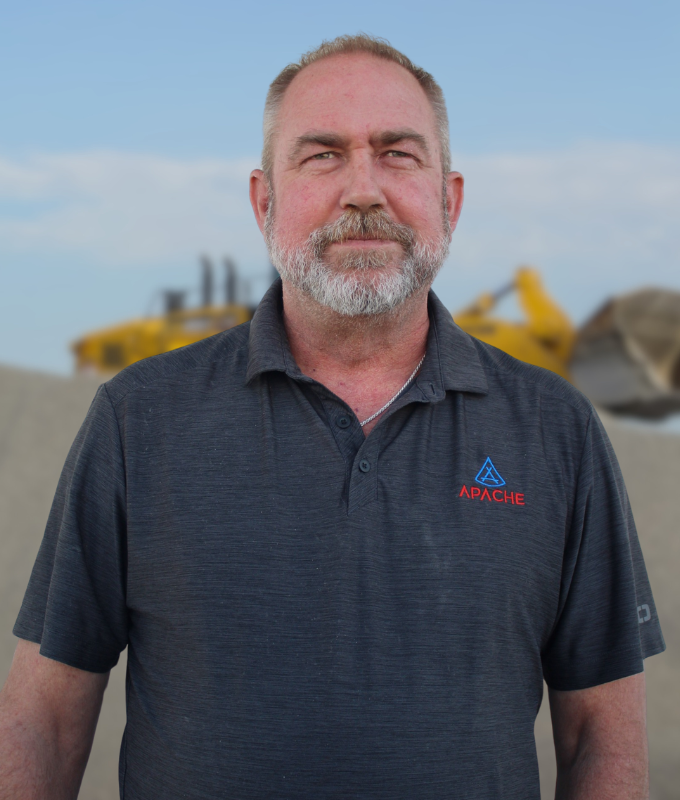
Nathan Myers
Co-Founder & Managing Director
Nathan Myers is Co-Founder and Managing Director of Apache Iron Works, headquartered in Cheyenne, Wyoming. With 30 years in the mining and aggregate equipment industry, he has helped design and deliver more than 180 mining projects across 7 states and 7 countries.